
Red Dead Redemption NETFLIX
Netflix, Inc.Adventure
4.81.90K Reviews
- Version
- 1.58.63226194
- Installs
- 1.00M
- Age Rating
- Mature 17+
Screenshots
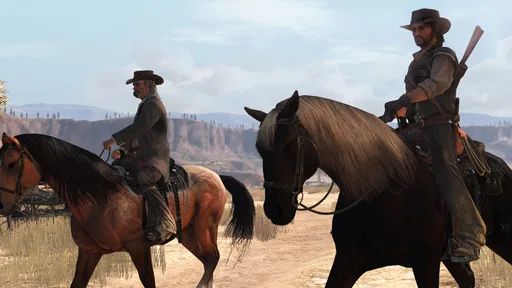
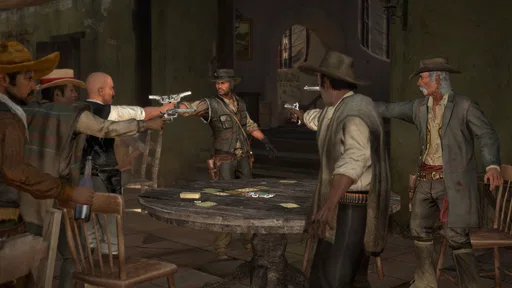
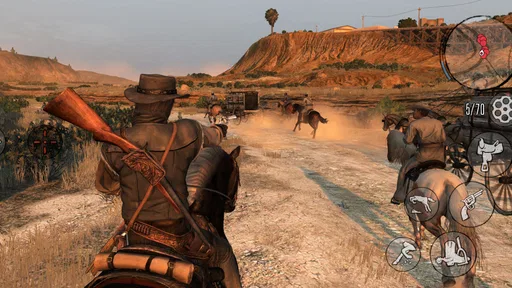
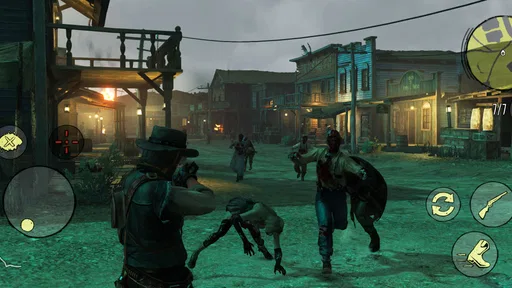
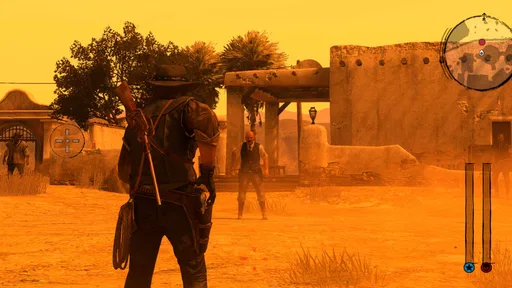
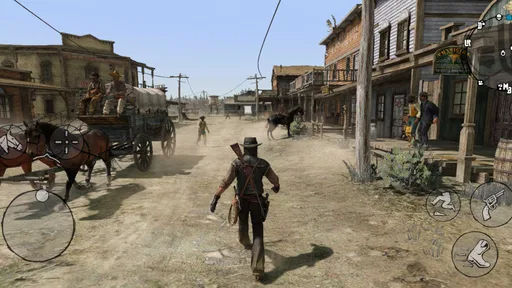
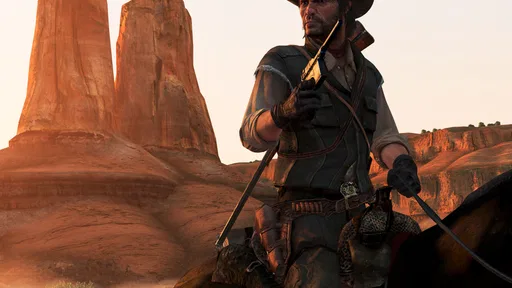
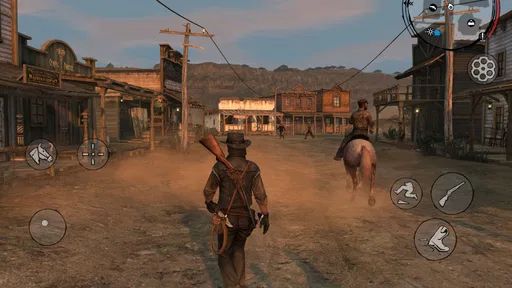
Our Review of Red Dead Redemption NETFLIX
 Analysis by Appyee
I went into Red Dead Redemption expecting a familiar western adventure, but what stayed with me was how confidently the game builds a mood before it asks me to do anything complicated. Its dusty roads, lonely horizons, sudden violence, and quiet stretches of travel work together rather than feeling like separate decorations. This is an adventure game from Netflix, Inc., offered free to play, and its Mature 17+ rating is important: the tone is serious, the world is harsh, and it is not designed as a lighthearted cowboy playground.
The game has already attracted a strong audience, with an average rating of 4.8 from around 89 thousand ratings and more than a million installs. Those figures do not replace personal experience, of course, but they match my impression that this is a substantial mobile release rather than a quick companion game. I tested it as something to play in both short sessions and longer stretches, and the difference matters. A brief visit can deliver a mission or a little exploration, while the setting really opens up when I give it time to breathe.
A western that makes its first impression through place
The opening impression is not built only around action. The game wants me to notice the landscape, the distance between locations, and the uneasy feeling of moving through a world that is larger than the immediate objective. That approach gives the adventure a slower identity than many mobile games. I am not constantly pushed from one reward screen to another; instead, I often feel like I am passing through a country with its own history and tensions.
That patience is one of its greatest strengths on a phone. When I have a little time before an appointment, I can complete a focused task without needing to understand a complicated progression system. When I have a longer evening, the same game supports a more immersive session because the setting rewards attention. The important distinction is that the experience does not feel designed exclusively around quick mobile interruptions.
The visual direction carries much of the responsibility. The western setting is recognizable without becoming visually empty. Open land, settlements, roads, and changing views give travel a purpose beyond simply reaching the next marker. I found myself remembering places by their atmosphere rather than by a menu name: a stretch of road that felt exposed, a settlement that felt busier, or a quiet area where the lack of activity became part of the tension.
That sense of space also creates a trade-off. The same distances that make the world convincing can make progress feel slow if I am in a hurry. Players who prefer constant combat, rapid missions, or compact maps may see travel as downtime. I think the game works best when I accept that movement is part of the western fantasy instead of treating it as an obstacle to skip mentally.
Art direction that supports the story
The art does not need to turn every moment into a spectacle. Its more useful achievement is consistency. The colors, terrain, clothing, buildings, and open skies all belong to the same world. Even when I am not actively following a story beat, the surroundings keep reinforcing the idea that this is a frontier shaped by distance and uncertainty.
I particularly liked how the visual design makes quiet moments readable. A road through open country does not look like a blank loading corridor. It suggests vulnerability, possibility, and the chance that something may interrupt the journey. That is a subtle design choice, but it changes how I approach travel. I pay more attention to what is ahead instead of treating the screen as a simple route between objectives.
The presentation also helps the game avoid the common problem of a mobile port feeling visually disconnected from its source material. I never got the impression that the western identity had been reduced to a few costumes and a brown color palette. The setting remains the central character, and the action makes more sense because it takes place inside that setting.
There is a practical lesson here for new players: do not rush through the first hours while looking only for major missions. Let the game establish its visual vocabulary. Once I understood how it uses empty space, settlements, and changing terrain, the pacing felt more intentional and less like a series of delays between objectives.
Sound, silence, and the rhythm of the ride
Sound is a major reason the atmosphere holds together. The game knows that a western needs more than gunfire and dramatic cues. The quieter passages have room to register, and that makes the louder moments feel more disruptive. I found the contrast more effective than a soundtrack that constantly announces the importance of every event.
Playing with headphones made the setting easier to appreciate. Environmental sound helped separate travel from confrontation, while the music gave certain scenes a stronger emotional shape without overwhelming the action. I would not call the audio a background detail; it is part of the pacing system. When the game becomes quiet, I feel the distance around the character. When the sound grows more urgent, I am prepared to treat the situation differently.
This is also where the game can be less convenient than a typical mobile adventure. It is playable in short sessions, but its mood benefits from uninterrupted attention. If I am commuting in a noisy place or playing while other media is running, I lose some of the contrast between silence, environmental detail, and musical emphasis. The game remains understandable, but the experience becomes flatter.
My practical advice is to adjust the session to the kind of play I want. For a quick mission, sound may be secondary. For exploration and story-heavy sections, headphones and a calmer setting make a noticeable difference. That is not a requirement to enjoy it, but it is one of the easiest ways to understand why the atmosphere works so well.
Why the pacing feels different from most mobile adventures
Many mobile games are built around a tight loop: enter, act, collect, upgrade, and repeat. This one is more comfortable with pauses between those beats. The rhythm moves from travel to observation, then to interaction or danger, and back to travel. That structure can feel unusually deliberate on a phone, especially if I am accustomed to games that offer a reward every few minutes.
I think the pacing is strongest when the game alternates rather than stays in one mode for too long. Long stretches of calm make a confrontation more memorable, while action gives the quieter sections a reason to exist. If every segment were intense, the setting would lose its character. If every segment were slow, the adventure would become tiring. The game generally understands that tension needs room to recover.
The drawback is that the rhythm is not equally suitable for every player. Someone looking for a fast arcade experience will probably find the pauses excessive. Someone who enjoys narrative travel, environmental mood, and gradual escalation is more likely to appreciate the design. This is one of the clearest cases where the usual alternative may be better: a shorter, mission-focused action game is a better choice when I only have a few minutes and want immediate feedback.
How the mechanics fit the western mood
The mechanics matter because atmosphere alone cannot carry a game this large. What I appreciated is that the action generally supports the identity of the setting instead of pulling me out of it. Movement, exploration, encounters, and mission objectives feel connected to the idea of surviving and moving through a difficult frontier rather than simply clearing abstract levels.
The game asks me to manage attention as much as reflexes. I need to read the surroundings, judge when to move forward, and understand whether a moment is inviting exploration or signaling danger. That makes the open setting mechanically useful. It is not just a backdrop for a linear sequence of fights; the space influences how I approach the next step.
At the same time, the controls are where mobile players should set realistic expectations. A large console-style adventure has more demands than a game designed from the beginning around a small touchscreen. I found that the experience works best when I give myself time to become comfortable with the control layout instead of judging it during the first few minutes. Familiar actions become easier once the interface stops competing for my attention.
That learning period is a genuine friction point. Players who want instant simplicity may feel that the game is asking too much from a phone screen. I also think longer sessions can make control fatigue more noticeable than in a compact mobile game. The solution is not complicated: use shorter early sessions, avoid rushing through encounters, and give yourself time to learn the relationship between movement, aiming, and camera control.
One useful habit is to separate exploration practice from mission pressure. When I am not being chased by an objective, I can learn how the character moves and how the camera behaves without the cost of a failed attempt. That made later action feel less like a struggle against the interface. It is a small adjustment, but it improves the first several hours considerably.
Who will get the most from it
This is a strong fit for players who want a complete-feeling western adventure on a mobile device, especially those who value setting and story atmosphere as much as immediate action. It also suits people who enjoy games that allow a mission to lead into travel, observation, and unexpected changes of pace. The free price makes it easy to try, but the Mature 17+ rating means families should not treat it as a general-audience adventure.
I would recommend it to someone who likes the idea of spending time in a world rather than simply finishing a chain of levels. It is also a good choice for a player who has enough patience for a slower opening and wants an adventure that feels substantial. The current version is 1.58.63226194, and the minimum operating system is Android 10 or later, so compatibility is worth checking before planning a long session.
I would not recommend it first to someone seeking a casual game for silent, one-handed play. The atmosphere depends on attention, the action benefits from control familiarity, and the setting can lose its impact when reduced to background noise. I would also point fast-action fans toward a more compact arcade adventure if their priority is instant combat and constant rewards.
Compared with the usual alternatives in the adventure category, this game stands out through scale and mood rather than a simple pick-up-and-play loop. A typical mobile western imitation may offer shooting, costumes, and a frontier theme, but this experience is more interested in making the landscape and the pauses matter. The trade-off is convenience: a smaller game may be easier to start, easier to control, and more satisfying in a five-minute window.
Everyday use and practical expectations
A realistic use case is an evening when I have half an hour before bed. I can choose a nearby objective, let the journey create the mood, and stop after a meaningful section instead of needing to complete an enormous chapter. On another day, I might use a longer uninterrupted session to explore more carefully and let the story rhythm develop. The game supports both approaches, but the second shows its strengths more clearly.
For storage and performance planning, I would treat it like a serious adventure release rather than a tiny casual download. Even without turning the review into a technical checklist, the scale of the experience suggests that a device running Android 10 or newer should be kept reasonably prepared for a demanding game. Closing unnecessary apps and leaving enough free space are sensible steps before installation or a long play session.
The free price is another practical advantage, particularly for players who are unsure whether a slower western adventure suits them. I can try the opening experience without committing money first. The more important question is not cost but time: the game asks whether I am willing to meet it at its pace. If I want quick entertainment with no adjustment period, free access alone will not solve that mismatch.
Netflix, Inc. is an unusual developer name for a game of this kind, and that makes the release feel more like a serious addition to a subscription-oriented entertainment ecosystem than a disposable mobile experiment. Still, I judge it by what happens on screen. Its success comes from the way art, sound, travel, and action reinforce one another, not from the developer label.
My verdict on the atmosphere
What makes this game memorable is its coherence. The art direction presents a frontier that feels exposed and lived in. The sound gives silence a role instead of filling every gap. The pacing lets tension build and release. The mechanics then place me inside that mood rather than asking me to ignore it while I chase rewards.
That coherence also explains the limitations. A game committed to distance and atmosphere cannot always be as immediate as a compact mobile action title. A touchscreen port of a broad adventure may require patience before the controls feel natural. The Mature 17+ tone will exclude younger players and anyone looking for a cheerful western fantasy. These are not minor footnotes; they define whether the experience will suit you.
After spending time with it, I would recommend giving Red Dead Redemption a chance if you want an adventure that treats its setting as more than scenery. Start slowly, use headphones when possible, and resist the urge to measure every journey by how quickly it reaches the next objective. The game becomes more convincing when I allow its quiet stretches to do their work.
My final view is positive, with one clear condition: this is best approached as a mood-driven western adventure, not as a fast mobile shooter. If that distinction sounds appealing, the free entry point and strong presentation make it an easy recommendation. If you prefer instant action, short levels, and minimal control adjustment, another mobile adventure will probably serve you better. For me, though, the balance between landscape, sound, pacing, and playable tension gives this release a rare sense of place.
Verdict
Strengths of Red Dead Redemption NETFLIX
- Full console-quality story with impressive visuals and atmosphere.
- Netflix subscription includes the game without extra purchase or ads.
- Touch controls are responsive and support is available for compatible controllers.
- Open-world exploration offers missions, wildlife, challenges, and hidden locations.
- Works offline after downloading, making it suitable for travel and commuting.
Limitations of Red Dead Redemption NETFLIX
- Requires a powerful, compatible phone or tablet for smooth performance.
- Large download size can consume significant storage space and mobile data.
- Battery drain and device heating may be noticeable during longer sessions.
- Netflix membership is required to access and continue playing the game.
- Touchscreen controls can feel less precise during intense shooting sequences.
Other Releases by Netflix, Inc.
View All
Netflix
Entertainment4.8

Sonic Mania Plus - NETFLIX
Action4.5

Bloons TD 6 NETFLIX
Strategy4.6

Football Manager 26 Mobile
Sports4.3
Similar Picks in This Category
View All
Roblox
Roblox Corporation4.2

Pokémon GO
Niantic, Inc.3.5

Ninja warrior: legend of adven
TOH Games4.6

Ninja Arashi
Black Panther4.6

Eyes - The Horror Game
Fearless Games sp. j.4.5

Critical Action:Gun Strike Ops
FPS Shooter & Action Game4.3
Frequently Asked Questions
What is Red Dead Redemption NETFLIX?
Red Dead Redemption NETFLIX is the mobile version of Rockstar Games’ acclaimed open-world western adventure, offered through Netflix Games for eligible subscribers. It follows John Marston as he travels across the American frontier and Mexico while confronting former gang members and his violent past. The mobile release includes the complete single-player campaign and is designed for touchscreen devices.
Do I need a Netflix subscription to play Red Dead Redemption on mobile?
Yes. Access to Red Dead Redemption through Netflix Games generally requires an active Netflix membership, with no separate purchase required inside the game. You must sign in using your Netflix account when prompted. Availability can depend on your country, subscription status, device compatibility, and the current Netflix Games catalog, so it is worth checking the official app store listing before downloading.
Does Red Dead Redemption NETFLIX work offline?
After the game has been installed and your access has been verified, Red Dead Redemption can generally be played offline, which is useful when traveling or using limited mobile data. An internet connection may still be required initially for downloading files, signing in, validating your Netflix membership, or installing updates. Save progress is stored locally, so avoid deleting the app before confirming your saves are backed up or retained.
What devices are compatible with Red Dead Redemption NETFLIX?
Compatibility depends on your Android or iPhone model, operating system version, available storage, and hardware performance. Because this is a large console-quality game, older or entry-level devices may not be supported or may provide a less consistent experience. Before downloading, review the official Google Play or App Store requirements and make sure you have enough free space for the game and its additional data.
Does the mobile version include multiplayer or extra content?
Red Dead Redemption NETFLIX focuses on the original single-player experience rather than online multiplayer. You can follow the main story, explore the open world, complete side activities, and experience the included campaign content on a mobile device. Multiplayer features from other Red Dead Redemption releases should not be assumed to be available. The game may also include mobile-specific controls and interface adjustments for touchscreen play.
Play our best games!


